
How to Select the Right 3-Point Flail Mower for Your Tractor
The 3 point flail mower is arguably the most versatile single PTO attachment a tractor owner can buy. It cuts lawn-quality turf, manages tall pasture grass, clears light brush, handles roadside and ditch banks, and even performs orchard understory maintenance—all from one implement. But with dozens of brands, blade configurations, and horsepower requirements on the market, choosing the right flail mower for your operation is harder than it looks. This guide cuts through the marketing noise.
What Makes a Flail Mower Different
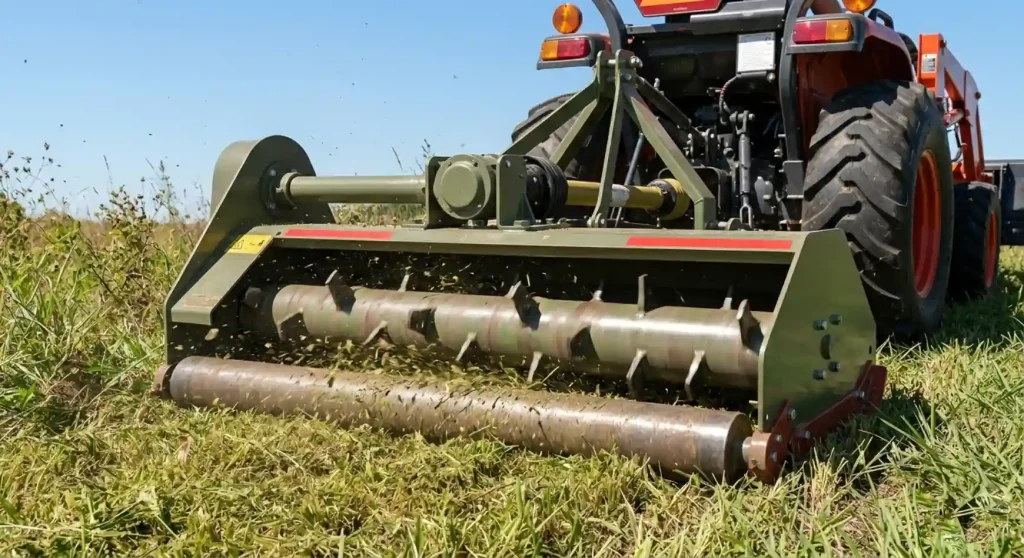
Unlike a rotary cutter with two or three large horizontal blades, a flail mower uses a horizontal rotor studded with dozens of small, hinged blades (“flails”). As the rotor spins at high RPM, the flails fly outward by centrifugal force and cut or smash vegetation. When the flails strike a rock or stump, they hinge back rather than launching debris. This design delivers three key advantages: superior safety (lower projectile risk), finer mulching, and versatility across grass types and densities.
Sizing the Deck to Your Tractor
The single biggest mistake buyers make is pairing an oversized deck with an undersized tractor. Use this sizing matrix as a starting point:
- 18–25 HP tractor: 48-inch deck
- 25–35 HP tractor: 48–60 inch deck
- 35–50 HP tractor: 60–72 inch deck
- 50–75 HP tractor: 72–84 inch deck
- 75–100 HP tractor: 84–96 inch deck
Flail mowers demand more HP per inch of deck than finish mowers because the rotor has much higher mass and the flails make continuous contact with material. Heavy brush applications demand additional HP—if you’ll regularly mow 2-inch diameter woody material, add 25% to the tractor HP requirement.
Y-Blades vs Hammer Blades vs Finish Blades
The choice of blade type fundamentally changes what a flail mower for compact tractor use can handle:
- Y-blades: Lightweight dual-cutting-edge blades optimized for grass and light weeds. Produce the finest, most lawn-like cut. Ideal for maintained turf, orchard grass, and municipal mowing.
- Hammer blades: Heavy, blunt-nosed blades designed to smash brush, saplings, and multi-year growth. Less refined cut but unmatched on heavy vegetation.
- Finish blades: Straight-edged blades optimized for clean lawn cutting. Slightly more expensive per blade but produce near-finish-mower quality on turf.
Most quality flail mowers accept all three blade types interchangeably. You can switch configurations seasonally—hammer blades for spring brush cleanup, Y-blades for summer grass maintenance.
Key Features to Evaluate
- Rear roller: Non-negotiable for a 3-point hitch flail mower. The roller follows ground contours, prevents scalping, and establishes cut height.
- Rotor balance: Factory-balanced rotors run vibration-free; unbalanced ones destroy bearings and shake the whole tractor.
- Belt tensioner: Auto-tensioning spring systems maintain belt life; manual tensioners require periodic adjustment.
- Slip clutch PTO shaft: Mandatory. Flail rotors have enormous inertia—without slip clutch protection, any jam damages the driveline or gearbox.
- Gearbox quality: Cast-iron housings with spiral bevel gears and Timken-equivalent bearings last far longer than pot-metal alternatives.
- Hitch category: Cat 1 for compact tractors; Cat 2 for utility tractors. Make sure the flail mower matches your tractor’s hitch.
- Skid shoes: Protect the deck edges when the mower contacts obstacles.
- Offset capability: Some flail mowers can offset to either side for ditch-bank work.
When a Flail Mower Is the Wrong Choice
Despite their versatility, flail mowers aren’t right for every application:
- Dense woody brush over 2 inches: A heavy-duty rotary cutter is more efficient
- Perfect lawn aesthetics (golf, sports fields): A dedicated finish mower produces superior cut quality
- Very steep slopes: Specialized verge mowers or walk-behind options are safer
- Budget under USD 2,000 total: A rotary cutter delivers more cutting capacity per dollar
Integrating a Flail Mower into Your Equipment Fleet
Flail mowers fit naturally alongside other forage-making equipment on a diversified farm. They handle pasture maintenance between haying seasons, clean up post-baling field refuse, and manage field edges that hay mowers can’t reach. If you’re building out a full haymaking operation, consider your mower alongside your baler in our 干草打包机系列—and match them with compatible hay rakes from our 干草耙系列 for a complete turnkey solution.
Maintenance Expectations
- Grease fittings every 8 hours of operation
- Inspect blades weekly; flip or replace worn blades
- Check belt tension monthly
- Change gearbox oil annually
- Verify rotor balance after any significant impact
Matching Flail Mower Size to Tractor Capability
The single most common mistake buyers make with flail mowers is specifying a deck too wide for their tractor’s PTO horsepower. Use this guide:
- 25–35 HP: 48–60 inch decks
- 35–50 HP: 60–72 inch decks
- 50–70 HP: 72–84 inch decks
- 70–100 HP: 84–96 inch decks
- 100+ HP: 96+ inch decks with heavy-duty rotor construction
Remember that tractor PTO horsepower is lower than engine horsepower—typically 85% of rated engine HP. A tractor rated 50 HP at the engine delivers roughly 42–43 HP at the PTO.
Critical Features to Specify
- Blade type: Y-blades for fine cut, hammer blades for brush, or specialty finish blades for turf quality.
- Rotor balance: Dynamically balanced rotors reduce vibration and extend bearing life. Cheap mowers skip this step.
- Gearbox rating: At least 20% above tractor PTO HP. Undersized gearboxes are the #1 failure point on budget flails.
- Rear roller: Solid steel roller ensures consistent cutting height and prevents scalping on uneven terrain.
- PTO driveline: Slip clutch or shear-bolt protection prevents gearbox damage on impact.
- Frame construction: Welded box-section frame outlasts bolt-together designs.
常见问题解答
How often should I replace flail blades? Y-blades typically last 100–300 hours; hammer blades 200–500 hours. Rocky soil cuts these intervals in half. Inspect before each use and replace any damaged flails immediately—an unbalanced rotor destroys bearings quickly.
Can a flail mower replace a brush hog entirely? For light to moderate brush, yes. Heavy woody material (saplings over 2 inches, multi-year growth) still demands a dedicated rotary cutter. Many diversified operations keep both.
Maintenance & Service Considerations
A well-maintained flail mower delivers 2,000+ hours of productive service before major rebuild. Key maintenance intervals: grease all bearings every 8 operating hours; inspect flails daily and replace any damaged; change gearbox oil annually; check belt tension monthly (if belt-driven); inspect rotor balance any time you hit a rock or large debris. Keep replacement flails (at minimum a full rotor’s worth), drive belts, and PTO U-joint repair kits on hand. The difference between a flail mower that lasts 15 years and one that fails in 3 years is entirely maintenance discipline, not initial quality.
Price Benchmarks (2026)
- 48-inch entry-level flail: USD 2,200–3,500
- 60-inch mid-range flail: USD 3,000–5,000
- 72-inch heavy-duty flail: USD 4,500–7,500
- 84-inch commercial-grade flail: USD 6,500–10,000
- 96-inch side-shift commercial: USD 9,000–15,000
Resale Value of Flail Mowers
Flail mowers hold resale value well when properly maintained. A premium flail with documented service history and intact gearbox typically retains 50–70% of original value after 5 years, and 30–50% after 10 years. Condition is everything: a rusted, neglected unit sells for scrap value regardless of original quality, while a well-cared-for unit from a reputable brand commands strong resale. This is why maintenance discipline pays off not only in reliability but in terminal asset value when it’s time to upgrade or sell.
As a final note, test-run the specific flail model you’re considering before committing to purchase if possible. Manufacturer specifications tell only part of the story—actual cut quality, vibration levels, and operator feel vary significantly between brands and models even at similar specifications. A test cut on your own ground reveals truths that datasheets cannot.
Recommended Related Product
🛠️ Y-Blade Replacement Set (48 pieces, Hardened Steel): Premium Y-blades for 60-inch flail mowers. Factory-hardened steel with balanced weight distribution. Direct replacement for most major-brand mower rotors. Individual fasteners included.
Find Your Ideal Flail Mower
Tell us your tractor horsepower, the vegetation types you need to manage, and your acreage. Our engineering team will match you to the ideal flail mower configuration—often at a price 30–40% below major-brand retail.