9GL-2.5/2.9 Pull-Type Mower Windrower | For 35–75hp Tractors
The 9GL-2.5/2.9 Pull-Type Mower Windrower cuts 2.5m and rakes 2.9m in one pass, powered by a 25–55kW (35–75hp) tractor at 540 r/min PTO. Mowing output 1.2–1.44 hm²/h; raking 1.5–1.8 hm²/h. 34 blades, 42 tines, single operator. Ideal for 5–25ha blocks.
9GL-2.5/2.9 Pull-Type Mower Windrower — Combined Cut & Rake for 35–75 hp Tractors
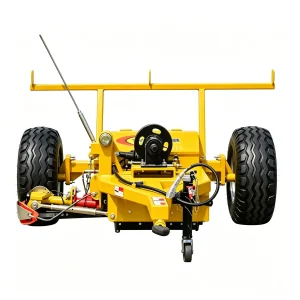
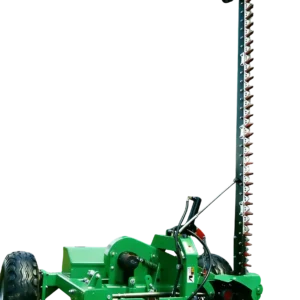
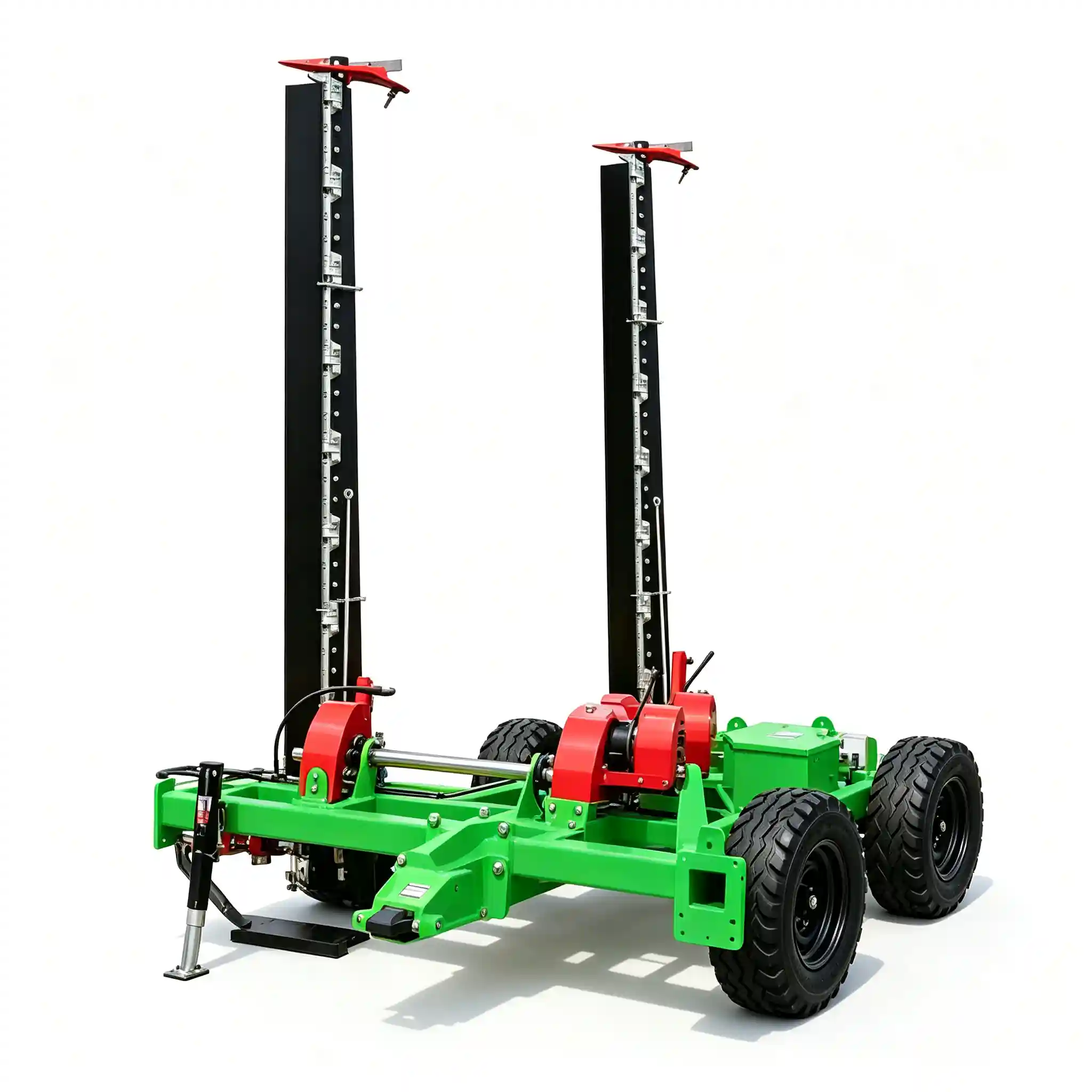
The 9GL-2.5/2.9 Pull-Type Mower Windrower is a compact rubber-tyred tow-behind machine that cuts and rakes forage in a single field pass. It pairs with wheeled tractors rated from 25 kW to 55 kW (35 hp to 75 hp) via a rear-mounted 540 r/min PTO. The cutter bar spans 2.5 m; the integrated raking head sweeps 2.9 m — gathering every cut stem into a continuous, baler-ready windrow without requiring a second machine or a return pass.
As a tractor drawn mower rake combo, the 9GL-2.5/2.9 eliminates the separate raking operation that adds 30–40% to total field time on conventional two-pass systems. At 6 km/h to 7 km/h, the mowing function produces 1.2–1.44 hm²/h and the raking unit simultaneously achieves 1.5–1.8 hm²/h. A single operator manages all functions — travel speed, PTO engagement, cutter bar lift, and rake head lift — from the tractor cab seat.
Both working units connect to the tractor's existing hydraulic circuit. Height adjustments are made from the cab without stopping. The 920 kg machine rides on its own pneumatic wheels, following ground contour independently of the tractor. It is designed for flat to gently sloping grassland and seeded forage plots on firm ground. Paddy fields, boggy soils, dense woodland, and terrain with heavy stone or tussock concentrations are outside its operating range.
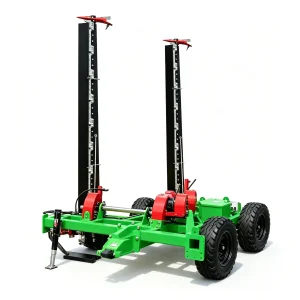
High-Efficiency Integrated Hay Mower Rake Features
The following six characteristics define the 9GL-2.5/2.9 against standalone mowers or separate rake units in the same tractor power bracket:
Simultaneous Mow & Windrow — One Tractor Circuit
On a 10 ha block, the combined pass at 1.3 hm²/h average takes roughly 7–8 hours. Running a standalone 2.5 m mower followed by a separate rake on the same area typically requires 12–15 hours and a tractor driver for each pass. The 9GL-2.5/2.9 consolidates this to one operator and one machine.
34 Reciprocating Blade Sections Across 2.5 m
The horizontal cutter bar carries 34 individually replaceable blade sections. The reciprocating shear action leaves a consistent 60–70 mm stubble — clean enough to encourage rapid regrowth on stands targeted for two or three cuts per season, without scalping the crown layer.
42 Tines at 71 mm Pitch — 2.9 m Rake Width
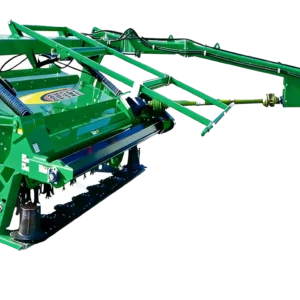
The raking head runs 42 tines spaced at 71 mm pitch. This close spacing collects all cut material — including short stems that looser-pitched rakes miss — and forms a dense, uniform windrow. Windrow consistency directly affects bale uniformity and pickup efficiency downstream.
Low-Entry Power — 25 kW (35 hp) Minimum
Despite integrating two working units, the matched power starts at 25 kW. The reciprocating blade design uses less energy per metre of cut than spinning disc alternatives, making the combined mow-rake function achievable without a high-horsepower tractor. This widens the addressable market for wholesale pull-type mower windrower suppliers targeting small-to-medium farm operations.
Hydraulic Lift on Both Working Units
The cutter bar and rake head each connect independently to the tractor hydraulic circuit. Headland turns are completed with both units raised in under 10 seconds from the cab. No manual pin adjustment or dismounting is required between passes — a meaningful time saving over a full mowing day.
920 kg Rubber-Tyred Trailing Chassis
The machine rides on its own pneumatic rubber wheels, distributing 920 kg across a wide footprint. Working dimensions are 3100 × 5000 × 950 mm; transport dimensions fold to 3100 × 2920 × 2900 mm for road movement between sites.
2026 Technical Specifications & Tractor Matching
Every parameter a procurement team or dealer network needs to verify tractor compatibility and field suitability before placing a 2026 wholesale order:
| # | Parameter | Birim | Value |
|---|---|---|---|
| 1 | Model | — | 9GL-2.5 / 9GL-2.9 |
| 2 | Attachment Type | — | Trailed (tow-behind, rubber-tyred) |
| 3 | Kesici Yapı | — | Reciprocating (horizontal blades) |
| 4 | Mowing Working Width | M | 2.5 |
| 5 | Raking Working Width | M | 2.9 |
| 6 | Matched Tractor Power | kW | 25 → 55 (35 hp → 75 hp) |
| 7 | PTO Shaft Speed | r/dakika | 540 |
| 8 | Çalışma Hızı Aralığı | km/sa | 6 → 7 |
| 9 | Mowing Productivity | hm²/sa | 1.2 → 1.44 |
| 10 | Raking Productivity | hm²/sa | 1.5 → 1.8 |
| 11 | Average Stubble Height | mm | 60 → 70 |
| 12 | Hareketli Bıçak Sayısı | adet | 34 |
| 13 | Number of Raking Tines | adet | 42 |
| 14 | Tine Pitch | mm | 71 |
| 15 | Makine Ağırlığı | kilogram | 920 |
| 16 | Dimensions — Transport (L × W × H) | mm | 3100 × 2920 × 2900 |
| 17 | Dimensions — Working (L × W × H) | mm | 3100 × 5000 × 950 |
| 18 | Operatörler Aranıyor | kişi | 1 |
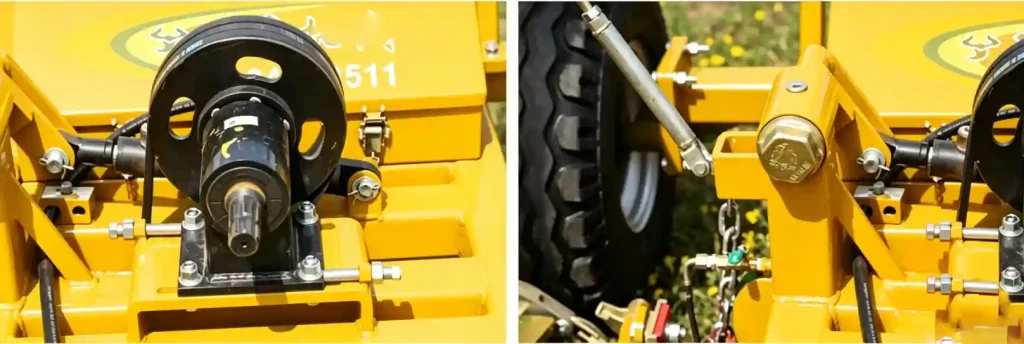
Driveline Note: This machine requires a rear-mounted 540 r/min PTO with a standard spline stub. Verify your tractor stub diameter and spline count before ordering. For a complete range of agricultural hydraulic cylinders compatible with the cutter bar and rake head lift circuits used on machines in this class, the metalite.net catalogue covers a broad selection of bore sizes and stroke lengths.
Optimized for Canadian Pastures and Small Slope Terrains
The 9GL-2.5/2.9 is sized for farms where tractor power sits in the 35–75 hp range and field blocks typically run 5 to 20 ha. As a Pull-Type Mower Windrower for 35–75 hp tractors, its primary use environments include:
- Small-to-medium prairie and upland hay operations — 5 to 25 ha blocks: At 1.2–1.44 hm²/h mowing rate, a 15 ha block is cut and windrowed in a single 10–12 hour shift. The same area with a standalone mower plus a separate raking pass would extend to 18–22 hours across two machine operations.
- Seeded forage stands — alfalfa, timothy, bromegrass: The 60–70 mm stubble residual falls within the agronomic safe zone for perennial legume-grass mixes targeted at two to three cuts per season. Crown preservation on first-year alfalfa stands is particularly important — the reciprocating blade shear does not drag or tear the plant base the way flail systems can.
- Natural meadow on gently sloping terrain: The rubber-tyred trailing chassis tracks ground contour independently of the tractor on slopes up to approximately 8–10%. This makes the machine suitable for BC interior upland pastures and similar undulating terrain where a rear-mounted implement would create uneven ground pressure at the cutter bar on each side of a slope crest.
- Pre-baling windrow preparation: The 2.9 m raking width produces windrows matched to the standard pickup width of most compact round balers (0.9 m to 1.2 m pickup). Operators baling 24 to 36 hours after the mow-rake pass can feed directly from the windrow without a merging pass — saving an additional field operation in the hay-making cycle.
- Livestock operations self-supplying hay — 20 to 80 animal units: A 60-AU beef operation requires roughly 90–120 hm² of hay per season. At 1.3 hm²/h average, the 9GL-2.5/2.9 covers that requirement in 70–90 field hours — achievable across a single good two-week weather window without subcontracting.
Not recommended for: waterlogged or boggy ground, paddy fields, dense woodland, and terrain with heavy stone, root masses, or concentrated tussock. These conditions risk blade fracture, tine bending, and hydraulic overload on the lift circuit.
Wholesale B2B Supply & Manufacturing Quality
Frame & Structural Construction
The main frame is fabricated from seamless steel tube, MIG-welded at all structural joints and phosphate pre-treated before painting to reduce corrosion initiation at weld seams. The drawbar and cutter-bar mounting arms — the two highest-load structural members — are built to heavy-section specification, which accounts for the 920 kg finished weight versus lighter-built alternatives in the same working-width category.
Each unit undergoes a full function test at the factory before dispatch: hydraulic circuit pressure, PTO stub alignment, blade section torque, tine attachment security, and wheel bearing pre-load are all checked against specification. Units that do not pass are returned to the assembly line, not dispatched for the importer to identify in the field.
Wholesale & OEM Supply Terms
The 9GL-2.5/2.9 is available to agricultural machinery dealers, wholesale distributors, and OEM buyers. Standard export documentation — commercial invoice, packing list, bill of lading, certificate of origin — is provided with every international order. Technical drawings and parts explosion diagrams are available to confirmed wholesale accounts for dealer service network setup.
Spare consumables — blade section kits (34 sections per bar) and tine replacement sets (42 tines per head) — should be ordered alongside the machine for distribution operations that need guaranteed local parts availability. Quantities and lead times are confirmed at time of order.
2.5 + 2.9 m
Cut width + rake width in one pass
34 + 42
Blade sections + raking tines
35–75 hp
Widest compatible tractor range in class
1
Operator for mow and rake combined
Sıkça Sorulan Sorular
How does the 9GL-2.5/2.9 Pull-Type Mower Windrower differ from a standalone mower?
A standalone mower cuts the crop and leaves it lying flat in the swath. A second raking machine must then pass the same field to gather the cut material into a windrow before baling. The 9GL-2.5/2.9 integrates both operations: the 2.5 m cutter bar cuts and the 2.9 m raking head immediately gathers the material into a windrow in the same tractor pass. This eliminates one full field operation, one tractor shift, and one re-entry of the field — reducing crop weather-exposure time and total labour cost per hectare.
What tractor specifications are required for this trailed mower conditioner design?
The matched power range is 25 kW to 55 kW (35 hp to 75 hp) with a rear-mounted 540 r/min PTO. This covers the majority of compact utility tractors in the 35–75 hp bracket — a very common class on small-to-medium livestock farms in Canada and comparable markets. Tractors below 25 kW risk drivetrain overload in dense or wet crop; tractors above 55 kW are mechanically compatible but provide no additional throughput benefit beyond the machine's 1.44 hm²/h mowing ceiling.
What is the blade replacement interval and servicing process?
The 34 blade sections on the 2.5 m cutter bar are individually replaceable. Under normal meadow and seeded forage conditions, edge life is typically one to two full cutting seasons before resharpening or replacement is needed. Sections are replaced individually — not as a complete bar assembly — which keeps running costs proportional to actual wear. Similarly, the 42 raking tines are individually replaceable at low per-unit cost. Spare section and tine kits should be confirmed at time of wholesale order.
Is this machine available from wholesale pull-type mower windrower suppliers for OEM or private-label orders?
Yes. The 9GL-2.5/2.9 is available for wholesale distribution, OEM supply, and private-label orders. Minimum order quantities, lead times, and customisation options — including colour, decal, and parts-kit configuration — are discussed at the enquiry stage. Export documentation including certificate of origin, packing lists, and quality certificates is standard for all international orders. Technical drawings and assembly exploded views are provided to confirmed wholesale accounts.
Why is the raking width (2.9 m) wider than the mowing width (2.5 m)?
The raking head is designed to cover a slightly wider path than the cutter bar. The additional 0.4 m of rake width ensures that material scattered toward the edges of the cut swath — by wind or crop spring-back — is still gathered into the windrow rather than left in the field. Without this overlap, edge material would require a separate cleanup pass. The combined result is a contained, uniform windrow directly behind the machine with no uncollected crop.
How does the 9GL-2.5/2.9 compare to the larger 9GL-5.0/5.6 model?
The 9GL-5.0/5.6 uses a 5.0 m cutter bar and 5.6 m raking width, matched to 30–60 kW (40–80 hp) tractors, and weighs 1100 kg. The 9GL-2.5/2.9 uses a 2.5 m cutter bar and 2.9 m raking width, matched to 25–55 kW (35–75 hp) tractors, and weighs 920 kg. The smaller model suits operations with blocks typically under 25 ha and tractors in the 35–55 hp range; the larger model is for operations targeting 30 ha and above where throughput per day is the primary constraint.
Ready to Upgrade Your Forage Harvesting Operations?
Contact our engineering team today for complete technical drawings and 2026 wholesale pricing on the 9GL-2.5/2.9 Pull-Type Mower Windrower. Share your annual volume estimate and target market — we respond within one business day.
Request Drawings & 2026 Pricing
OEM & private-label enquiries welcome · Export documentation included · Spare parts kits available