
Hay Rake Machines
Built for the Field
From compact pull-type mower windrowers to wide-cut 12m horizontal rakes — every model engineered for clean windrows, fast throughput, and long service life. Suitable for 35–75HP tractors.
Our Range
Hay Rake Models — Find Your Match
Two product families: pull-type mower windrowers that cut and rake in one pass, and finger wheel rakes that efficiently gather pre-cut hay into uniform windrows.
-

9LZY-9.0 саусақ тәрізді шөп тырмағышы: тракторда пайдалануға берік және тиімді
-
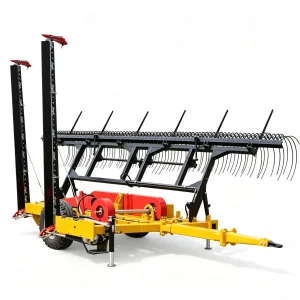
9GL-5.0/5.6 Pull-Type Mower Windrower | Cut & Rake in One Pass
-
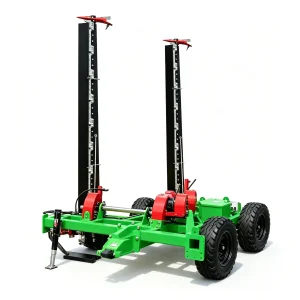
9GL-2.5/2.9 Pull-Type Mower Windrower | For 35–75hp Tractors
-
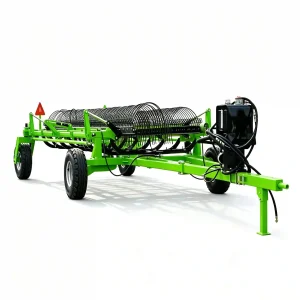
9LH-12 Horizontal Hay Rake for Tractor | Trailed Grass Raking Machine
-
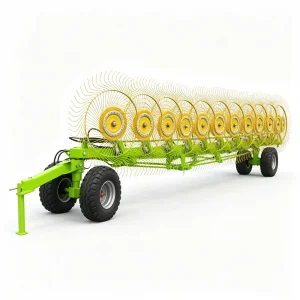
9LZD-9.0 Finger Wheel Rake | 9m, 17 Discs, 7.2–9 hm²/h
-
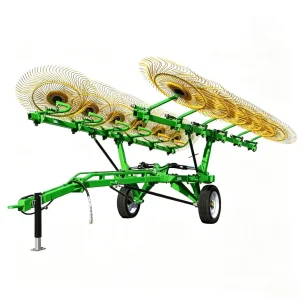
9LZ-6.0 Tractor Finger Wheel Rake | Agricultural Hay Raking Equipment
Not Sure Which Rake? Use This Selector
Answer the questions below and we will point you to the right model for your operation.
Side by Side
Full Specification Comparison
All five hay rake models compared across key parameters to help you make an informed purchase decision.
| Модель | Type | Жұмыс ені | Tractor HP | Max Output | One-Pass Mow | Ground-Driven | Best Use Case |
|---|---|---|---|---|---|---|---|
| 9GL-2.5/2.9 | Mower Windrower | 2.5 – 2.9 m | 35 – 75 HP | — | ✓ | — | Small paddocks, compact tractors |
| 9GL-5.0/5.6 | Mower Windrower | 5.0 – 5.6 m | 75 HP+ | — | ✓ | — | Medium fields, efficiency-focused |
|
9LH-12 Max Width |
Horizontal Rake | 12.0 m | 75 HP+ | 6 – 12 HM2/H | — | — | Large commercial hay ops |
| 9LZ-6.0 | Finger Wheel Rake | 6.0 m | 50 HP+ | — | — | ✓ | Dry hay, low running cost |
| 9LZD-9.0 | Finger Wheel Rake Dual | 9.0 m | 75 HP+ | — | — | ✓ | Large fields, clean windrows |
Buyer’s Guide
Which Hay Rake Type Is Right for You?
The two key types in our range serve different operational needs. Here is a clear comparison to help you decide.
Knowledge Hub
What Is a Hay Rake — and Why Does It Matter?
A hay rake is an agricultural implement used to gather cut grass or crop material into uniform rows called windrows. These windrows allow cut material to dry evenly under airflow and sunlight before being collected by a round or square baler.
Without a hay rake, cut material lies flat and thick on the ground, drying unevenly and making clean baler pick-up difficult. A well-formed windrow is the foundation of a consistent, high-quality bale — and that consistency begins with choosing the right rake for your conditions.
Uniform windrows produce more consistent bale weights and densities
Proper airflow through the windrow speeds drying time — critical in variable Australian and New Zealand climates
Raking also allows two or more mower swaths to be merged into one windrow, reducing the number of baler passes
Finger wheel rakes minimise leaf shatter and nutrient loss compared to aggressive raking methods
Mower windrowers eliminate a complete field pass, saving fuel and time
Buying Tip from Balerhay
Match your rake working width to roughly 1.5× your baler pick-up width. For example, a 2.2m baler pick-up works well behind a 9LZ-6.0 raking two 3m mower swaths into one merged windrow.
Who Uses Our Hay Rakes?
Serving Farmers and Distributors Across Australia and Beyond
Balerhay supplies hay rake equipment directly from the factory to buyers across Australia, New Zealand, Southeast Asia, and Canada. Our customers range from owner-operated sheep and cattle stations to large pastoral companies and agricultural machinery dealers seeking reliable OEM equipment at competitive export pricing.
Because we supply direct, there is no distributor markup. You get verified specifications, responsive sales support, and access to spare parts — all in one place. Every order includes full export documentation, making customs clearance straightforward.
We understand that downtime during a short hay-making window costs money. That is why our after-sales team can advise on common field adjustments, spare tine supply, and compatible baler configurations before you commit to a model.
Contact our team at [email protected] for a personalised recommendation and FOB pricing.
Why Balerhay
6 Reasons Buyers Choose Us
From first enquiry to field operation, here is what sets Balerhay apart as your hay rake supplier.
FAQ
Frequently Asked Questions About Hay Rakes
Answers to the questions we hear most from farmers and dealers purchasing hay rake equipment.
Ready to Order or Need Advice?
Our team at Balerhay is here to help you choose the right hay rake, confirm tractor compatibility, and arrange export shipping — all in one conversation.
What is a hay rake used for?
A hay rake gathers cut grass or crop material into neat rows called windrows — uniform lines of hay that allow even drying under airflow and sunlight. Without a rake, cut material lies flat and dries unevenly, making it difficult for a baler to collect cleanly. A good windrow is the foundation of a consistent, high-quality bale.
What is the difference between a finger wheel rake and a mower windrower?
A finger wheel rake uses multiple ground-driven rotating wheels with spring-steel tines to gather <em>already-cut</em> hay into windrows. A mower windrower combines cutting and raking in one pass — it mows standing grass and immediately forms a windrow, saving time and eliminating a separate raking operation.
What tractor HP do I need for your hay rakes?
A finger wheel rake uses multiple ground-driven rotating wheels with spring-steel tines to gather <em>already-cut</em> hay into windrows. A mower windrower combines cutting and raking in one pass — it mows standing grass and immediately forms a windrow, saving time and eliminating a separate raking operation.
Do you ship hay rakes to Australia and New Zealand?
Yes. Balerhay specialises in export sales to Australia, New Zealand, Canada, and Southeast Asian markets. We prepare all required documentation including commercial invoices, packing lists, bills of lading, and phytosanitary certificates. Contact balerhay.com for a shipping estimate and lead-time confirmation to your port.
How do I choose the right working width?
As a practical guide: for farms under 100 acres, the 9GL-2.5/2.9 or 9LZ-6.0 is a sensible starting point. For 100–500-acre properties, the 9GL-5.0/5.6 or 9LZD-9.0 improves productivity meaningfully. For 500-acre-plus commercial operations, the 9LH-12 at up to 12 hectares per hour is the right choice. We also recommend matching rake width to 1.5× your baler pick-up width for the cleanest windrow formation.
Are spare parts available after purchase?
Yes. We maintain stock of high-wear components including spring-steel tines, wheel hubs, bearings, and drive parts for all models in the range. Spare parts can be ordered directly through our sales team and dispatched separately from equipment orders. We strongly recommend ordering a tine service kit with your initial purchase to have spares on hand during the season.