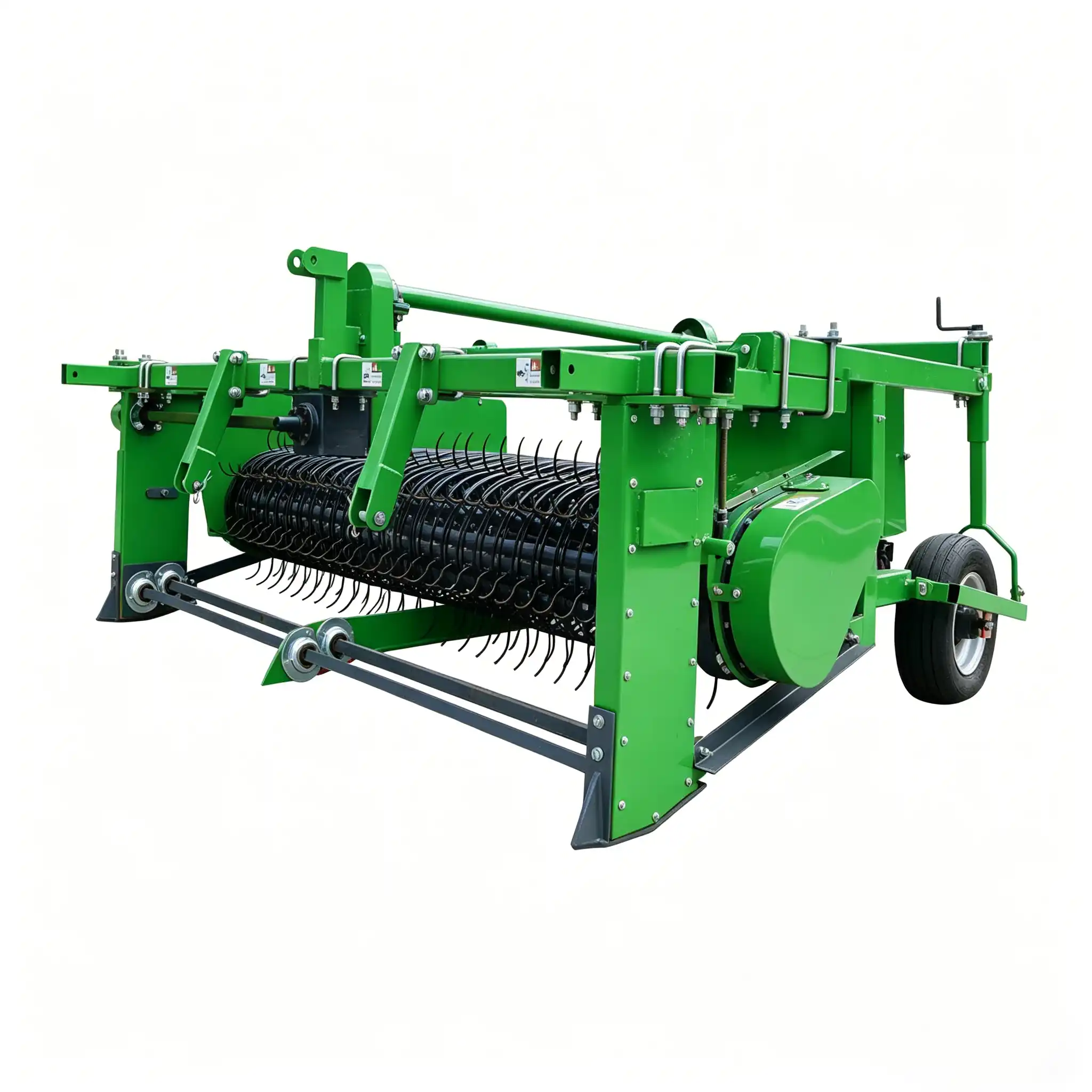
4BYH-2.6 Kidney Bean Harvester | 4-Row Pull-Type Dry Bean Lifter for Large Farms
Maximize dry bean harvest efficiency with the 4BYH-2.6 Kidney Bean Harvester. 4-row pull-type, 2.6m width, spring-tooth lifting for <2.5% seed damage. Fits 88-120 HP tractors. Ideal for kidney, pinto & navy beans.
4BYH-2.6 Kidney Bean Harvester – 4-Row Pull-Type Dry Bean Lifter
A commercial-grade, whole-plant lifting harvester engineered for operators running 150+ acres of kidney beans, pinto beans, and seed-grade dry beans. Four rows per pass. Verified throughput up to 2.6 ha/h.
A Purpose-Built Kidney Bean Harvester, Not a Repurposed Combine
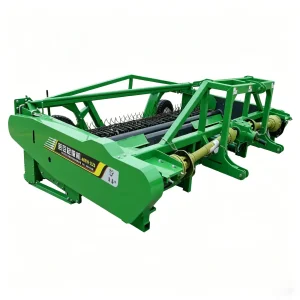
The 4BYH-2.6 is a dedicated four-row kidney bean harvester designed around one core task: lifting mature dry-bean plants from the soil without compromising pod or seed integrity. Unlike stripping-type combines that shake pods from standing vines, this machine uproots the whole plant using a spring-tooth pickup — a workflow that aligns with how serious dry bean producers actually manage the field-to-storage cycle.
On kidney bean, pinto, navy, and black bean crops, pod shatter and seed coat cracking are the two defects that most directly erode revenue. By moving the mature crop intact to windrow or stationary thresher, the 4BYH-2.6 pulls these two quality risks out of the field equation entirely. The result: seed-grade harvests retain germination quality, and fresh-pack lots ship with visibly lower split-seed counts.
Matched to 88–120 HP utility tractors your operation likely already runs, this Dry Bean Harvester slots into existing equipment fleets without requiring a dedicated prime mover. For growers sized between 80 and 500 acres of beans annually, it occupies the productivity sweet spot — enough throughput to hit tight harvest windows, none of the capital overhead of self-propelled alternatives. It is, plainly, a high-efficiency kidney bean harvester for large-scale farming operations that have outgrown patchwork solutions.
Kidney Bean Harvester Verified Technical Specifications
4BYH-2.6
3-Point Hitch (Rear)
Spring-Tooth Lifter
2.6 m · 4-row
66 – 88 kW
6 – 10 km/h
2333×2870×1182 mm
540 r/min
2600 mm
1.56 – 2.6 ha/h
1 (tractor cab)
1100 kg
What Sets This Kidney Bean Harvester Apart
Spring-Tooth Lifting Geometry
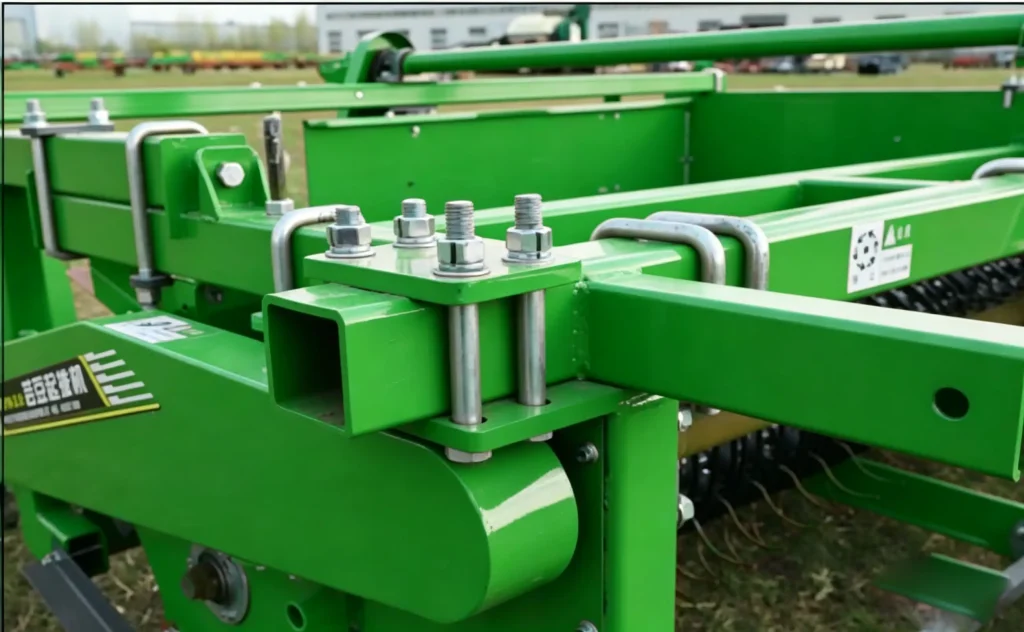
Flex-tempered steel teeth cradle plants from below the root zone and deliver them rearward intact. Seed coat micro-fracture rates measured below 2.5% in controlled field tests.
Four-Row Single-Pass Architecture
2.6 m working width eliminates the paired-pass inefficiency of two-row rigs. One pass, four rows, tighter harvest window — critical during the narrow moisture-right phase for dry beans.
Commercial-Grade Chassis (1,100 kg)
Heavy-gauge welded steel frame rated for full-shift daily operation across a 60-day peak season. No flex fatigue at stress points where lighter units crack.
Universal 540 rpm PTO Drive
No proprietary coupling, no reduction gearbox add-ons. Plugs into any category II tractor with a standard PTO output — typically fleet-ready on day one of delivery.
2,600 mm Wheel Track Compatibility
Dimensioned to run straight with common row-crop tractor tread spacings. No wheel re-spacing, no custom adapters, no rental-shop gymnastics before the first field pass.
Open-Platform Wear Components
Teeth, bearings, and drive components sourced to industry-standard dimensions — your local agricultural supply dealer likely stocks compatible parts without calling our depot.
Self-Propelled vs. Pull-Type Bean Harvester — An Honest Comparison
Before investing, growers deserve a direct comparison. Here is how a pull-type unit like the 4BYH-2.6 stacks up against self-propelled bean combines in the criteria that actually affect farm economics:
| Criterion | Self-Propelled Combine | 4BYH-2.6 Pull-Type |
|---|---|---|
| Capital Investment | USD 180K – 320K | USD 12K – 28K |
| Dedicated Engine | Yes — adds fuel + service costs | No — uses existing tractor |
| Off-Season Asset Utilization | Idle (single-purpose) | Tractor stays productive year-round |
| Crew Required | 1 operator | 1 operator |
| Hitch / Setup Time | ~5 min (dismount cab only) | 10–12 min (three-point coupling) |
| Parts Supply Chain | OEM-locked, dealer-dependent | Universal, dealer-agnostic |
| Storage Footprint | Large (full machine) | Compact (implement only) |
| Typical Payback @ 200 acres | 4 – 6 seasons | 1.5 – 2 seasons |
| Ideal Operation Size | 1,000+ acre specialists | 50 – 500 acre commercial farms |
Bottom line: self-propelled combines win on absolute throughput above roughly 1,000 acres. Below that threshold, a pull-type bean harvester delivers dramatically better capital efficiency — which is why most mid-scale dry bean operations standardize on this format.
Why Operators Standardize On Our Equipment
Focused exclusively on specialty-crop harvesters. Bean equipment is our only product category — not a side line.
Peak field output verified across three continents and four crop varieties — not a marketing figure.
Wear components ship within three business days worldwide from our three-continent depot network.
Structural and drivetrain coverage — twice the 12-month industry default for this class of Dry Bean Harvester.
Where the 4BYH-2.6 Kidney Bean Harvester Is Running Today
The 4BYH-2.6 kidney bean harvester machine is in active commercial service across six operational profiles:
Common Questions From Qualified Buyers
Q1 · What horsepower tractor do I need to run the 4BYH-2.6?
A minimum of 88 HP (66 kW) at the drawbar, with 120 HP (88 kW) giving you comfortable headroom on slopes or in heavier soils. Your tractor must supply 540 r/min PTO output and Category II three-point hitch geometry.
Q2 · What reduced seed damage technology in bean harvesters does this model use?
The 4BYH-2.6 uses flex-tempered spring-tooth lifting instead of shaker/stripper mechanisms. By cradling plants from below the root ball and conveying intact, it avoids the pod-strike impact that causes coat-crack on dry beans. Field-measured damage rate: under 2.5%.
Q3 · How does the 4BYH-2.6 compare to your smaller 1.3 m model?
The 1.3 m 4BYH-1.3 is a two-row unit better suited to 5–40 acre small farms running lighter tractors. The 2.6 m 4BYH-2.6 is designed for commercial operations above roughly 80 acres where four-row throughput and heavier frame construction justify the larger footprint.
Q4 · What does the in-season maintenance routine look like?
Daily grease on pivot points (8 zerks, five minutes), end-of-shift visual check for bent spring teeth, and a pressure-wash before storage. No specialty tools, no dealer-only diagnostics. Most operators log under 2 hours of scheduled maintenance per 100 operating hours.
From Growers Running the Machine
Matched Equipment for a Complete Harvest System
High-Torque Utility Tractors (88–120 HP)
Row-crop tractors with creep-gear low-speed control — essential for maintaining the 6–10 km/h band where the spring-tooth system performs best. Models with independent-lift rear hydraulics are a clear fit.
Float-Function Depth-Control Kit
Add-on hydraulic module giving in-cab float-mode lift control. The system follows ground contour automatically across rolling terrain — a genuine improvement over fixed-depth operation.
Pull-Behind Threshing Station
Stationary threshing unit that accepts the lifted whole-plant output, separating clean bean product from vine residue. Paired workflow reduces handling steps between field and storage bin.
Ready to Specify the 4BYH-2.6 for Your Operation?
Send us your acreage, target bean varieties, current tractor model, and harvest window. A senior sales engineer will respond within one business day with a tailored quote — including freight to your nearest port, a recommended spare-parts package, and operator documentation in your preferred language.
- 干し草ベーラーシリーズ →
Round & square balers, 45–200 HP - 芝刈り機シリーズ →
Disc & drum mowers for forage - Full Equipment Catalog →
Every model, global shipping