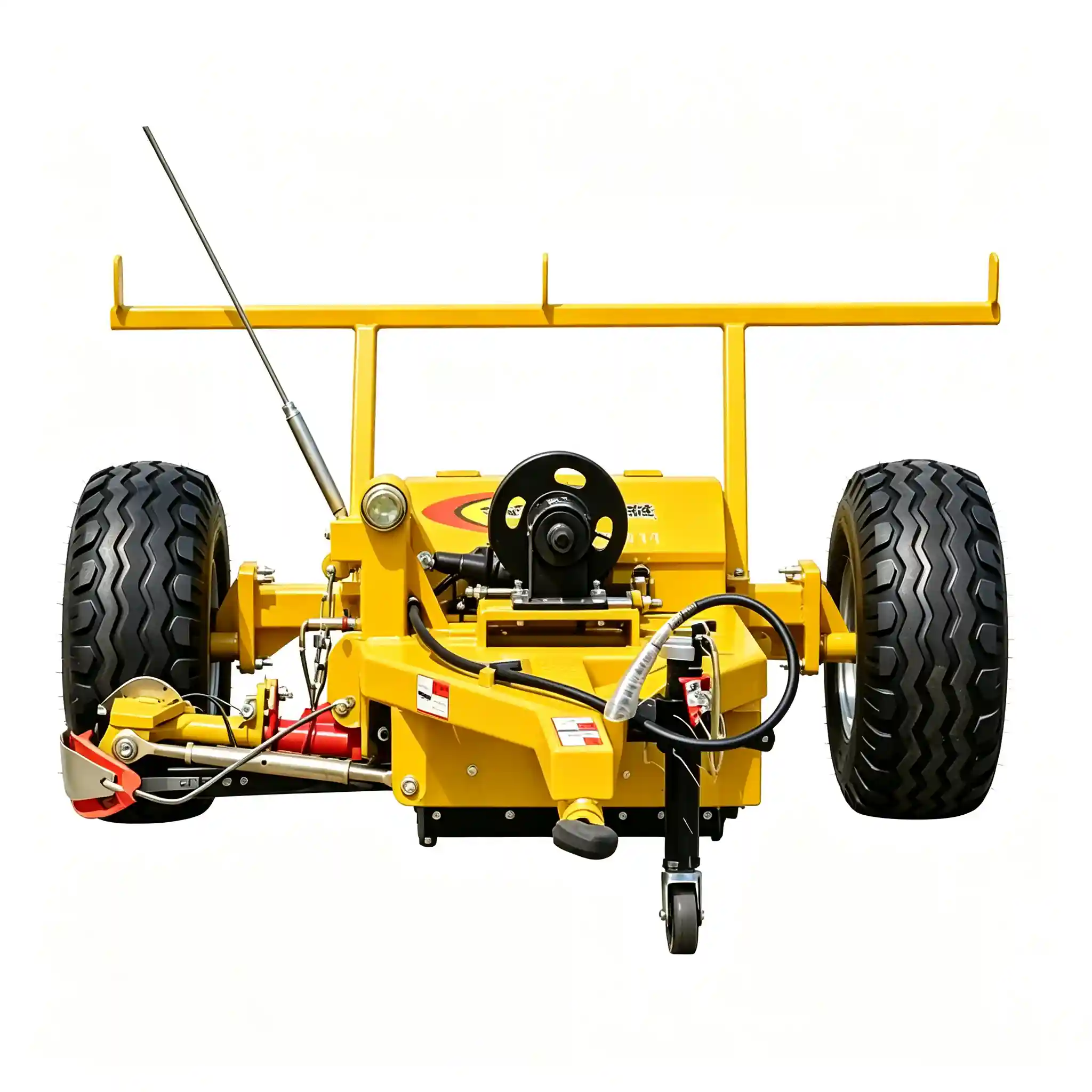
9GD-2.5 Trailed Single-Blade Mower | 2.5m Reciprocating Cut
The 9GD-2.5 Trailed Single-Blade Mower delivers a 2.5m reciprocating cut powered by a 15–35kW (20–50hp) tractor at 540 r/min PTO. It mows 2.0–3.0 hm²/h, leaves a 60–70mm stubble, and is operated by a single driver. Certified to GB/T10940-2008.
9GD-2.5 Trailed Single-Blade Mower — 2.5 m Cut for Natural and Cultivated Pastures
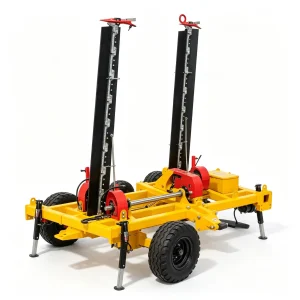
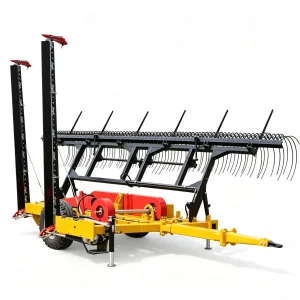
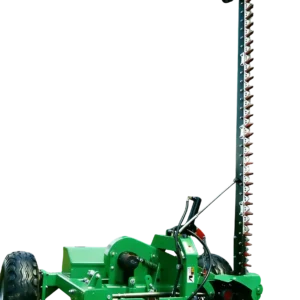
The 9GD-2.5 Trailed Single-Blade Mower is a reciprocating-cutter mow machine towed by a wheeled tractor rated between 15 kW and 35 kW (20 hp to 50 hp). It delivers a clean 2.5-metre swath at working speeds of 6 km/h to 10 km/h, reaching a productivity of 2.0 hm² to 3.0 hm² per hour. A single operator on the tractor seat handles the entire mowing cycle — no additional ground crew is required.
Designed for natural meadows and seeded forage plots, this pull-type rotary mower excels wherever terrain is firm and relatively clear of standing water. It is not recommended for paddy fields, waterlogged ground, dense forest understorey, or areas with heavy stone or tussock concentrations. The manufacturer tests and certifies this model against Chinese national standard GB/T10940-2008 (Reciprocating Mowers) and holds an official Agricultural Machinery Trial and Appraisal Certificate.
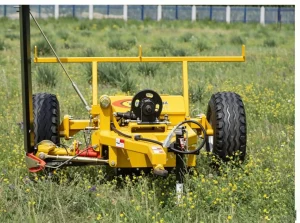
The cutter bar height is handled entirely by the tractor's hydraulic circuit — no manual crank adjustment between passes. Combined with the compact 490 kg machine weight and a low matched-power threshold, this mower suits small-to-medium livestock farms sourcing their own hay rather than buying in commercial feed.
Technical Specifications & PTO Requirements
| Parameter | Satuan | Value |
|---|---|---|
| Nama Model | — | 9GD-2.5 |
| Attachment Type | — | Trailed (tow-behind) |
| Cutter Type | — | Reciprocating (horizontal single blade bar) |
| Working Width | M | 2.5 |
| Matched Tractor Power | kW | 15 → 35 (20 hp → 50 hp) |
| PTO Shaft Speed | r/min | 540 |
| Working Speed Range | km/jam | 6 → 10 |
| Number of Moving Blades | buah-buahan | 34 |
| Machine Dimensions (L × W × H) | mm | 2000 × 4300 × 950 |
| Average Stubble Height | mm | 50 → 70 |
| Field Productivity | hm²/h | 2.0 → 3.0 |
| Operators Required | person | 1 |
| Berat Mesin | kg | 490 |
| Compliance Standard | — | GB/T10940-2008 (Reciprocating Mowers) |
Key Features of the Pull-Type Reciprocating Mower
The following characteristics separate this pull-type rotary mower from simple mounted alternatives in the same power class:
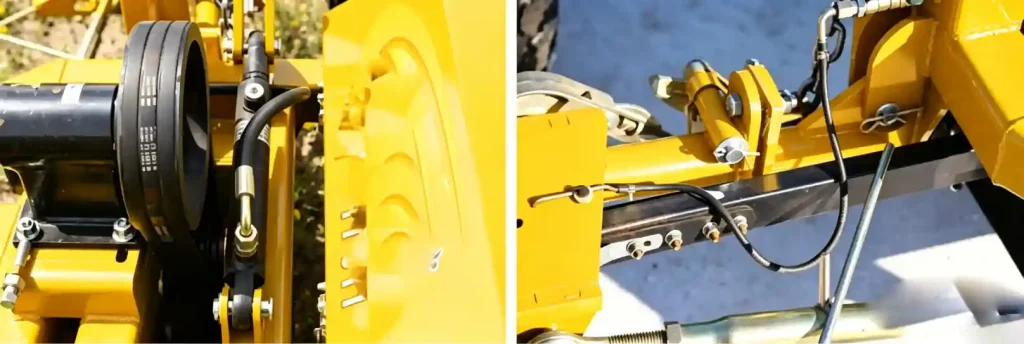
Hydraulic Cutter Bar Lift
Raise and lower the cutter bar from the tractor cab via the existing hydraulic system. No manual unlocking between rounds — pure seat-based operation.
Low Power Demand — 15 kW Entry Point
Most farms in the 20–50 hp bracket already own a compatible tractor. No power upgrade is needed, keeping the total cost of ownership low from day one.
34-Blade Reciprocating Cutter Bar
The horizontal bar carries 34 moving blades at a 540 r/min PTO speed, producing a clean shear cut that leaves a tidy 50–70 mm stubble — shorter than many flail alternatives at this power level.
Rational, Low-Fault Drivetrain
The drive path from the PTO through the gearbox to the cutter bar uses a straightforward power routing with few wear points. Field operators report low unplanned downtime when operating within the matched speed and crop weight limits.
Single-Operator Workflow
The tractor driver manages all functions — travel, PTO engagement, and cutter lift — without a second worker in the field. On a 3 hm²/h day, one person can mow a 15 hm² block in a five-hour shift.
Compact Trailed Profile
At 2000 × 4300 × 950 mm and 490 kg, the machine fits a standard farm trailer for inter-field transport. The tow-behind configuration keeps tractor ballast requirements minimal compared to front-mounted equivalents.
Heavy-Duty Applications in Canadian Farms & Rough Terrains
The 9GD-2.5 is built for firm-ground forage production. Farms and cooperatives across grassland regions — including the Canadian Prairies, northern pasture belts, and similar climates — find the PTO driven tow-behind rotary mower well suited to the following uses:
- Natural meadow mowing: Native grassland that sees seasonal growth of 0.4 m to 1.0 m responds well to the reciprocating shear action — stems are cut rather than shredded, protecting the root mat from heat stress.
- Seeded forage plots: Alfalfa, timothy, bromegrass, and mixed legume-grass stands up to 1.2 m tall are handled cleanly at 6 km/h to 8 km/h.
- Pasture renovation: Where over-mature stands need cutting back before reseeding, the 50–70 mm stubble height provides a consistent baseline without scalping the topsoil.
- Rough hill terrain: Because the machine trails behind the tractor on its own wheels, it follows ground contours independently. Gentle slopes and undulating prairie are manageable; steep sidehills or heavily waterlogged ground are outside the machine's design envelope.
- Livestock-supporting farms: Beef cattle, dairy, and sheep operations typically require 1.5 to 3.0 hm² of hay per animal-unit per year. At 2.0–3.0 hm²/h throughput, a 100-AU operation can mow its seasonal requirement in 50–150 field hours.
Not suitable for: paddy fields and flooded soils, wetlands and boggy ground, dense woodland understorey, or areas with heavy stone and tussock concentrations. Operating in these conditions risks blade damage and gearbox overload.
Core Components: Gearbox & Horizontal Cutting Blades
Understanding the mechanical layout helps buyers evaluate running costs before placing a wholesale order.
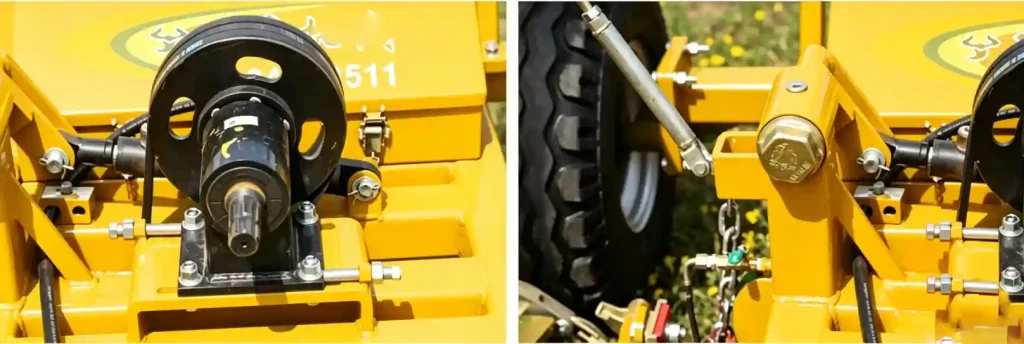
Gearbox & PTO Interface
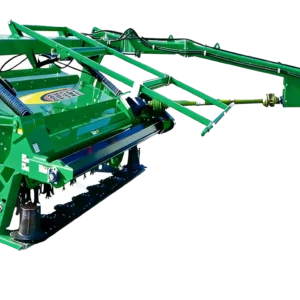
Power enters the machine via a standard 540 r/min PTO stub. The gearbox converts and distributes this input to drive the reciprocating cutter bar at the required blade frequency. The cast-iron housing is oil-bathed and sealed against dust and chaff ingress. Routine maintenance is limited to seasonal oil changes and drive-shaft joint inspection — both achievable with basic farm tools.
For compatible PTO drive shafts, cross-joint assemblies, and universal joint parts that connect your tractor to this mower's input stub, see the agricultural drive shaft range at driveshaftjoint.com — a useful reference for sourcing replacement or spare driveline components.
34-Section Horizontal Blade Bar
The single cutter bar spans the full 2.5 m working width and carries 34 individual blade sections. Each blade section is replaceable independently, which keeps spare-parts cost proportional to actual wear rather than requiring a full bar swap. Blades are hardened to resist dulling in abrasive soil contact; typical edge life in normal meadow conditions is one to two full seasons before resharpening is needed.
The reciprocating action differs from a disc-mower's spinning discs: the blade bar moves back and forth laterally rather than rotating, which produces a scissor-type shear. This keeps energy demand low and makes the machine suitable for smaller tractors — the key reason the 9GD-2.5 can run on 15 kW while delivering a 2.5 m swath.
Complete Your Haymaking Line-Up
The 9GD-2.5 is the first step in a two-pass or three-pass hay system. For farms that need a single machine combining cutting and conditioning in one pass — reducing wilting time from 36–48 hours to under 24 hours — consider pairing it with or replacing it with a trailed mower-conditioner once throughput requirements grow beyond what a standalone mower delivers.
Matching your mower to the right baler pickup width and hay rake is equally important. An 8-ft mower swath fed into a 14-ft rake combining two swaths should produce windrows no wider than the baler's pickup — avoiding bridging and uneven bale density.
Pertanyaan yang Sering Diajukan
What tractor size do I need to run the 9GD-2.5 Trailed Single-Blade Mower?
The matched power range is 15 kW to 35 kW (20 hp to 50 hp). This covers the majority of compact and utility tractors commonly used on small-to-medium livestock farms. The PTO must deliver 540 r/min — the standard agricultural PTO speed for this class of equipment. Tractors below 15 kW risk overloading the drivetrain in heavy crop; tractors above 35 kW can be used but bring no additional cutting performance.
Is the 9GD-2.5 suitable for a PTO driven tow-behind rotary mower application in Canada?
Yes — provided ground conditions are firm and the area is clear of stones and standing water. Canadian prairie grassland, upland pastures, and seeded forage plots in the 20–50 hp tractor bracket are the ideal environment. Wetland areas, rocky outcrops, and heavily tussocked bush terrain are outside the design scope and should be avoided to prevent blade and gearbox damage.
How does the reciprocating blade system compare to a disc mower?
A reciprocating (sickle-bar) cutter bar moves blades back and forth in a lateral shear motion. Energy demand per metre of cut is lower than for spinning disc mowers, which is why the 9GD-2.5 can work on 15 kW tractors where a comparable-width disc mower typically requires 30 kW or more. The trade-off is that reciprocating bars are more sensitive to stone contact and do not handle very dense, tangled growth as well as flail or disc designs.
What is the cutting height and can it be adjusted?
Average stubble height is 50 mm to 70 mm. The cutter bar is raised and lowered using the tractor's existing hydraulic system — the operator adjusts height from the cab without leaving the seat. This hydraulic integration is one of the features that reduces per-hectare fatigue in multi-hour mowing shifts.
Can wholesale pull-type rotary mower suppliers provide spare blade sections?
Yes. The 34 blade sections on the cutter bar are individually replaceable, not sold as a complete bar assembly. Wholesale buyers and distributors can stock blade section kits independently of the machine itself. When ordering in bulk, confirm the blade section pitch matches the 9GD-2.5 bar specification — dimensions are available from the supplier on request. Typical blade service life in normal meadow conditions is one to two full cutting seasons per edge.
What certification does the 9GD-2.5 carry?
The machine complies with GB/T10940-2008, the Chinese national standard for reciprocating mowers. In addition, it has been awarded an Agricultural Machinery Trial and Appraisal Certificate issued after third-party field testing. These certifications confirm the performance figures — working width, productivity, and stubble height — have been independently verified, not just stated on a data sheet.
Ready to Quote or Place a Wholesale Order?
Tell us your target market, annual volume, and preferred PTO configuration — we will respond within one business day with pricing, MOQ, and shipping options.
OEM & private-label enquiries welcome · Export documentation available · GB/T10940-2008 certified