9GL-5.0/5.6 Pull-Type Mower Windrower | Cut & Rake in One Pass
The 9GL-5.0/5.6 Pull-Type Mower Windrower cuts 5.0m and rakes 5.6m simultaneously, powered by a 30–60kW (40–80hp) tractor at 540 r/min PTO. Delivers 2.4–2.8 hm²/h mowing and 3.0–3.6 hm²/h raking. One operator, one pass. 68 blades, 78 tines.
9GL-5.0/5.6 Pull-Type Mower Windrower — Cut & Windrow in a Single Pass Across 5.0–5.6 m
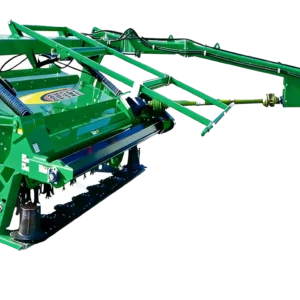
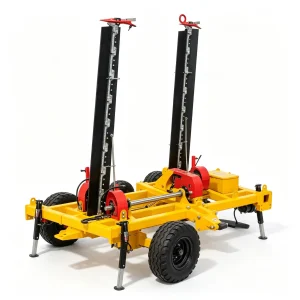
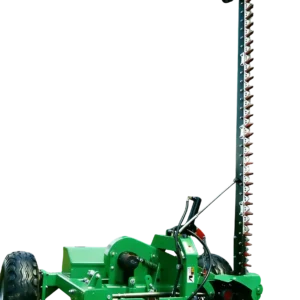
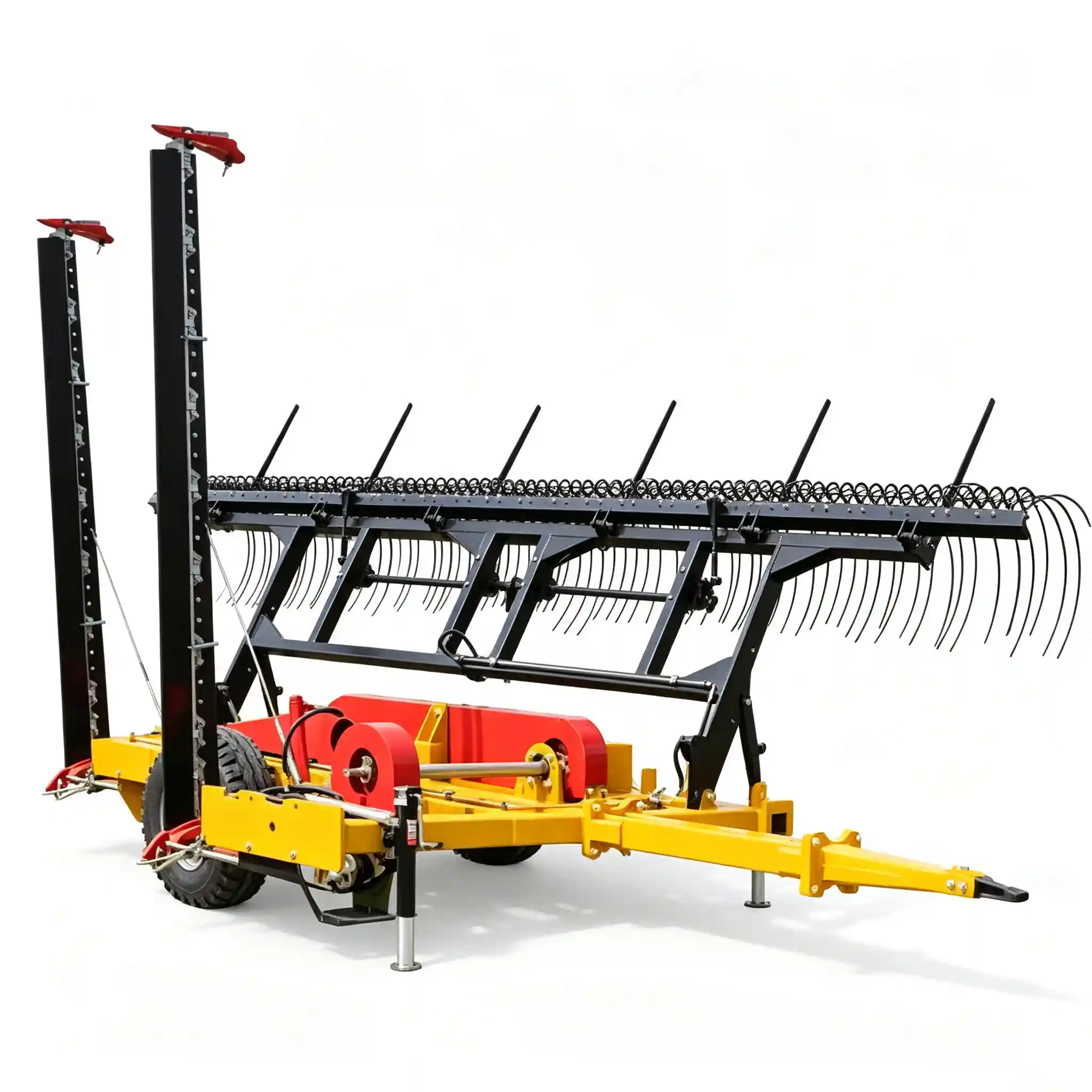
The 9GL-5.0/5.6 Pull-Type Mower Windrower is a tow-behind combination machine that cuts and rakes forage simultaneously — two field operations completed in one pass. It connects to the rear PTO of a wheeled tractor rated between 30 kW and 60 kW (40 hp to 80 hp) and runs on rubber-tyred wheels that carry the machine's own weight across the field. The cutter bar spans 5.0 m; the integrated raking unit sweeps a 5.6 m working width, gathering the freshly cut material into a continuous windrow ready for baling or collection without a second machine pass.
As a trailed windrowing machine, the 9GL eliminates the separate raking operation that accounts for 30–40% of total hay-making field time on conventional two-pass systems. At 6 km/h to 7 km/h, the mowing function delivers 2.4–2.8 hm²/h while the raking function simultaneously achieves 3.0–3.6 hm²/h. The combined result is a clean 60–70 mm stubble and a tidy, uniform windrow in a single tractor circuit of the field.
Both the cutter bar and the raking unit are raised and lowered by the tractor's existing hydraulic circuit. The operator controls all functions from the cab seat — no second crew member is needed for the mowing or windrowing cycle. The machine is suited to flat grassland and gently sloping pastures. It is not intended for use on waterlogged ground, dense woodland, terrain with concentrated rock, or areas with heavy tussock concentrations.
Core Advantages of the Tractor Drawn Hay Rake Mower
Buyers evaluating this tractor drawn hay rake mower against separate mower-plus-rake combinations will find the productivity and cost-per-hectare case straightforward:
One Pass Replaces Two Field Operations
Cutting and raking run concurrently. On a 30 ha block at 2.5 hm²/h average, the combined pass takes roughly 12 hours. Running a separate rake after a separate mower on the same block would require 20–24 hours total — an extra day of weather exposure for the cut crop.
78 Raking Tines at 71 mm Pitch
The raking head carries 78 tines spaced at 71 mm pitch across the 5.6 m rake width. This close spacing produces a dense, consistent windrow without gaps or trailing wisps — important for baler pickup efficiency and uniform bale density.
68-Blade Reciprocating Cutter Bar
The horizontal cutter bar carries 68 individual blade sections across the 5.0 m cut width. The reciprocating shear action leaves a 60–70 mm stubble and consumes less energy per metre than spinning-disc alternatives, keeping the machine within the 30–60 kW tractor bracket.
Hydraulic Lift on Both Working Units
The cutter bar and raking unit each connect to the tractor hydraulic circuit independently. The operator raises both, either, or neither from the cab without stopping. Headland turns are completed with both units raised in under 10 seconds — no dismounting required between passes.
Rubber-Tyred Trailing Chassis
The machine rides on its own pneumatic rubber wheels, distributing its 1100 kg over a wide footprint. Ground pressure stays low enough to avoid significant soil compaction on firm pasture — a meaningful factor on high-value perennial stands targeted for three cuts per season.
Compact Transport Footprint
Transport dimensions of 3860 × 5600 × 3000 mm fold the working width from 7600 mm down to 5600 mm for road travel. Confirm transport width compliance with local road regulations before inter-site movement on public roads.
2026 Technical Specifications & PTO Drive Requirements
The following table lists every parameter procurement teams and dealers need to verify tractor match and field suitability before placing a wholesale order.
| # | Parameter | واحد | Value |
|---|---|---|---|
| 1 | مدل | — | 9GL-5.0 / 9GL-5.6 |
| 2 | Attachment Type | — | Trailed (tow-behind, rubber-tyred) |
| 3 | ساختار برش | — | Reciprocating (horizontal blades) |
| 4 | Mowing Working Width | متر | 5.0 |
| 5 | Raking Working Width | متر | 5.6 |
| 6 | Matched Tractor Power | کیلووات | 30 → 60 (40 hp → 80 hp) |
| 7 | PTO Shaft Speed | دور در دقیقه | 540 |
| 8 | محدوده سرعت کار | کیلومتر در ساعت | 6 → 7 |
| 9 | Mowing Productivity | همم²/ساعت | 2.4 → 2.8 |
| 10 | Raking Productivity | همم²/ساعت | 3.0 → 3.6 |
| 11 | Average Stubble Height | میلیمتر | 60 → 70 |
| 12 | Number of Moving Blades | رایانههای شخصی | 68 |
| 13 | Number of Raking Tines | رایانههای شخصی | 78 |
| 14 | Tine Pitch | میلیمتر | 71 |
| 15 | وزن دستگاه | کیلوگرم | 1100 |
| 16 | Dimensions — Transport (L × W × H) | میلیمتر | 3860 × 5600 × 3000 |
| 17 | Dimensions — Working (L × W × H) | میلیمتر | 3860 × 7600 × 850 |
| 18 | اپراتورهای مورد نیاز | شخص | 1 |
PTO & Driveline Note: This machine requires a rear-mounted 540 r/min PTO output with a standard spline stub. Confirm your tractor's PTO stub diameter and spline count before ordering. For a catalogue of compatible agricultural gearboxes and PTO driveline components suited to this power and speed class, the metalite.net range covers a broad selection of sizes and torque ratings.
High-Efficiency Windrowing for Canadian Farms & Rough Terrains
As a PTO driven trailed mower windrower for Canada, the 9GL-5.0/5.6 is designed for farms where the harvest window is short and every hour in the field counts. The following applications represent the core use cases:
- Large-scale prairie hay operations — 40 ha and above: The combined mow-and-rake pass at 2.4–2.8 hm²/h (mowing) means a 40 ha block can be cut and windrowed in a single 15–17 hour operation. On Prairie farms where a 3–5 day dry window determines the entire season's hay quality, halving field time directly reduces weather-related loss risk.
- Natural meadow and seeded forage — alfalfa, bromegrass, timothy: The 60–70 mm stubble preserves stand crowns for regrowth. On stands targeted at two or three cuts per season, this residual height is within the agronomic safe zone for most legume-grass mixes grown in Canadian Prairie and BC interior conditions.
- Gently sloping and undulating terrain: The rubber-tyred trailing chassis follows ground contour independently of the tractor. Shallow-slope paddocks — up to approximately 8–10% grade — are within normal operating range. Steep sidehills, waterlogged ground, and boulder-heavy terrain are outside the design specification.
- Pre-baling windrow formation: The 5.6 m raking width produces windrows sized to match the pickup width of most commercial round and square balers without a merging pass. Operators running a baler 24–36 hours after the mow-rake pass can feed directly from the windrow without repositioning.
- Livestock cooperative and custom-hire operations: For a pull-type hay cutter windrower serving large farms on a contract basis, the single-pass design means more hectares per day per operator. At 2.6 hm²/h average across an 8-hour shift, one machine covers 20 ha per day — enough to service multiple smaller clients within a regional area during a single weather window.
Not recommended for: paddy fields, flooded or boggy ground, dense woodland, and terrain with heavy concentrations of stone, root masses, or tussock. These conditions risk blade fracture, tine damage, and hydraulic system overload.
Global B2B Supply & Wholesale Manufacturing Quality
Frame Construction & Weld Quality
The main frame is fabricated from seamless steel tube sections, MIG-welded at structural joints and stress-tested before paint application. The 1100 kg machine weight reflects the use of heavy-section steel in the drawbar and cutter-bar mounting arms — components that absorb the most shock load during operation in uneven crop density.
Paint finish is applied after phosphate pre-treatment to reduce rust initiation at weld seams — a common failure point on lower-cost agricultural fabrications that skip this step.
Assembly & Pre-Dispatch Inspection
Each unit is fully assembled and function-tested at the factory before dispatch. The inspection checklist covers hydraulic circuit pressure, PTO stub alignment, blade section security, tine attachment torque, and wheel bearing pre-load. Machines that do not pass this check are returned to the line — not held at the port or left to the importer to identify.
Wholesale buyers and distributors can request a pre-shipment inspection report per order batch. Export documentation including packing lists, quality certificates, and customs HS classification support is provided as standard for all international orders.
GB/T10940
-2008 Reciprocating Mower Standard
68 + 78
Blades + Tines per machine
5.6 m
Raking width — widest in class at this power band
1
Operator for both mow and rake functions
سوالات متداول
What is the minimum tractor size required for the 9GL-5.0/5.6 Pull-Type Mower Windrower?
The matched power range is 30 kW to 60 kW (40 hp to 80 hp) with a rear-mounted 540 r/min PTO. Tractors below 30 kW cannot maintain consistent cutter bar and raking unit speed under full crop load, which leads to uneven stubble and windrow gaps. Tractors above 60 kW are mechanically compatible but do not improve throughput beyond the machine's 2.8 hm²/h mowing ceiling.
How does the cutting height adjustment work on this trailed mower conditioner design?
Cutting height is controlled via the tractor's hydraulic system. The operator raises or lowers the cutter bar from the cab during operation without stopping. The design produces a 60–70 mm average stubble height under normal field conditions. There is no manual crank or mechanical pin adjustment required between passes — the hydraulic circuit handles all height changes.
What is the blade replacement interval and how are worn sections serviced?
The 68 blade sections on the cutter bar are individually replaceable. Under normal meadow and seeded forage conditions, edge life is typically one to two full cutting seasons before resharpening or replacement. Sections are replaced individually as they wear — not as a complete bar assembly. Spare blade section kits should be confirmed at time of order, particularly for wholesale buyers who need guaranteed local spares availability.
Is this machine suitable as a PTO driven trailed mower windrower in Canadian Prairie conditions?
Yes, for established Prairie grassland, seeded forage plots, and upland pastures on firm, relatively flat to gently sloping ground. The machine handles the typical hay-making cycle in Prairie regions — single-pass mow and windrow — within the 30–60 kW tractor bracket most Prairie operations already own. Waterlogged bottomland, rocky outcrops, and heavily tussocked terrain are outside the design specification.
What is the difference between the 5.0 m mowing width and the 5.6 m raking width?
The cutter bar cuts a 5.0 m swath. The raking head, positioned behind and slightly wider than the cutter bar, sweeps a 5.6 m path — gathering the cut material from the full swath and concentrating it into a narrower windrow. This 0.6 m overlap on each side of the cut swath ensures no freshly cut material is left outside the windrow. The resulting windrow width is determined by the raking head angle setting, adjustable to match the baler pickup width.
What documentation is available for wholesale and OEM importers?
Standard export documentation includes: commercial invoice, packing list, bill of lading, certificate of origin, and GB/T10940-2008 compliance certificate. Technical drawings and parts explosion diagrams are available to confirmed wholesale buyers for dealer service network setup. Pre-shipment inspection reports can be arranged on request for large-volume orders.
Ready to Upgrade Your Agricultural Equipment Line?
Contact our engineering team today for complete technical drawings and 2026 wholesale pricing on the 9GL-5.0/5.6 Pull-Type Mower Windrower. Share your target market and annual volume — response within one business day.
Request Technical Drawings & Pricing
OEM & private-label welcome · GB/T10940-2008 certified · Export documentation included